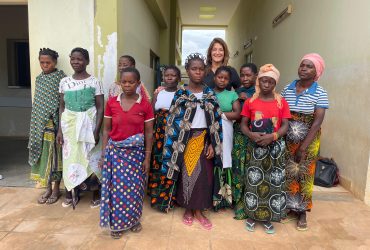
Last week, Hamlin Fistula UK Trustee Marchu Belete visited the Hamlin Fistula Ethiopia hospital in Addis Ababa. In this article, she reflects on her experiences and shares her personal impressions from the visit.
First impressions


Arriving at the Hamlin Fistula Hospital in Addis Ababa, the first sensation is not one of clinical urgency, but of tranquillity. Large, mature trees line the entrance, their shade offering an immediate sense of calm. It is a striking contrast to the trauma and hardship that many women have endured before reaching this place. This calm is intentional. It signals that this is somewhere safe.
As I walked through the grounds, my eye was drawn to the colourful knitted blankets worn by patients dotted around the grounds. Many of these blankets are lovingly made by supporters of Hamlin Fistula UK. Seeing them here, thousands of miles from the UK, was a powerful reminder that compassion travels. These blankets are more than warmth; they are symbols of connection, care and solidarity between supporters in the UK and women rebuilding their lives in Ethiopia.
The gardens themselves are beautifully maintained, offering space for rest and recovery. At the entrance of the hospital stand the large golden statues of Dr Catherine Hamlin and her husband, Reg. Bathed in Ethiopian sunshine, they feel less like monuments and more like guardians of the hospital’s ethos.
The Hamlin Model of Care
What surprised me most during my visit was how consistently the Hamlin Model of Care is practised everywhere you look. This is not simply a surgical hospital. Care begins at the gate and continues long after surgery is complete. Women move through a clearly defined pathway: from pre-care and assessment, through expert surgical repair, and into post-operative rehabilitation and reintegration.
Post-care is where hope becomes tangible. Women are supported to regain confidence, dignity and independence. Some train to become nurses or nurse aids within the Hamlin network; others are encouraged and supported to establish small businesses, enabling them to return to their communities with skills, income and renewed status. This holistic, wraparound approach is central to Hamlin’s mission and one of the reasons its outcomes are so respected globally.
Hope is the cornerstone of everything the hospital does. The aim remains clear and ambitious: to end obstetric fistula in Ethiopia. Far from being an abstract target, this goal is visible in daily practice, in staff motivation, and in the systems that have been built over decades.
The legacy of Catherine and Reg Hamlin

Every member of staff I spoke to spoke with deep respect and affection for Catherine and Reg Hamlin. They are referred to simply as “our mother” and “our father”. One quote was repeated to me more than once, attributed to Catherine: “I won’t be able to eradicate fistula in my time — but you can do it in yours.” This message clearly lives on. Staff are highly motivated, proud of their work, and deeply committed to carrying the vision forward.
The Hamlin Fistula Hospital is not only Ethiopia’s centre of excellence for fistula care; it is a world-renowned institution. It is widely recognised as a global data and knowledge capital for obstetric fistula. Surgeons and clinicians from across the world come here to learn, to train, and to understand a condition that remains a devastating reality for too many women globally.
Reaching women in remote rural areas remains one of the greatest challenges. Yet Hamlin’s “long arms” extend far beyond Addis Ababa. Through sustained investment in prevention and referral networks, including the training and placement of midwives in rural health centres, women with fistula can be identified early and referred for life-changing treatment.
The Lifeline of Stoma Care
One area that particularly stayed with me was the stoma care service. Tigist Debebe, the hospital’s stoma nurse, explained how essential stoma bags are for women living with complex fistula injuries. Around 600 women depend on these supplies, which must be available consistently.
“This is like oxygen to the women — without it they won’t survive. Women come to pick up their supplies every six months and they are looked after throughout their lives.”
Tigist


These stoma bags are not a one-off intervention; they are an ongoing, life-sustaining need. Ensuring a reliable supply is critical and depends entirely on continued support.
As a trustee of Hamlin Fistula UK, this visit reaffirmed why support from the UK matters so profoundly. The hospital is a living example of what long-term commitment, compassionate care and strategic investment can achieve. For supporters, and for those considering becoming supporters, I hope this reflection offers reassurance that your generosity is not only changing individual lives — it is helping to build a future where fistula is finally consigned to history.

Marchu Belete is a Hamlin Fistula UK trustee, born in Ethiopia and now based between Ethiopia and the UK. With more than 20 years’ experience advancing women’s rights and leadership, she has worked from grassroots projects to UK Parliament, always rooted in dignity, justice and empowerment.